AI CRM Systems: How Artificial Intelligence Is Redefining Customer Relationship Management
February 25, 2026
Customer expectations have changed permanently. Businesses today are expected to respond instantly, personalize every interaction, and predict customer needs before they are clearly expressed. Traditional CRM platforms struggle to meet these demands. This is where CRM and AI converge to create intelligent, adaptive, and predictive customer ecosystems. AI powered CRM systems use automation, machine learning, and AI agents CRM to transform raw customer data into actionable insights—helping businesses scale relationships, not just manage contacts.
An AI powered CRM is an advanced customer relationship management system that integrates artificial intelligence technologies such as machine learning, predictive analytics, natural language processing, and marketing automation artificial intelligence. Instead of acting as a static database, AI CRM systems continuously learn from customer behavior, interactions, and historical data to improve engagement, sales efficiency, and customer retention.

AI CRM adoption is no longer optional for competitive organizations. Businesses that rely only on traditional CRM platforms risk falling behind in speed, personalization, and customer satisfaction.
AI CRM platforms are built on several advanced technologies that work together seamlessly.
Machine learning enables the CRM to identify patterns in customer behavior, predict churn, and recommend next-best actions.
Predictive models forecast customer intent, deal success probability, and lifecycle value with high accuracy.
NLP allows AI agents CRM to understand customer messages, emails, and chat conversations in human language.
AI-driven automation personalizes campaigns, optimizes email timing, and adapts messaging based on user behavior.
The AI CRM landscape is evolving rapidly, driven by innovation and real-world business needs.
Key trends shaping AI CRM platforms:
Modern platforms like kivo.ai focus on intelligent automation rather than surface-level AI features.
AI agents CRM act as digital team members that operate 24/7 across multiple customer touchpoints.
Capabilities of AI agents in CRM:
AI CRM platforms deliver measurable advantages across departments.
Key benefits include:
Many organizations struggle with AI CRM adoption due to avoidable implementation errors.
Common mistakes businesses make:
Avoiding these pitfalls ensures AI delivers value rather than complexity.
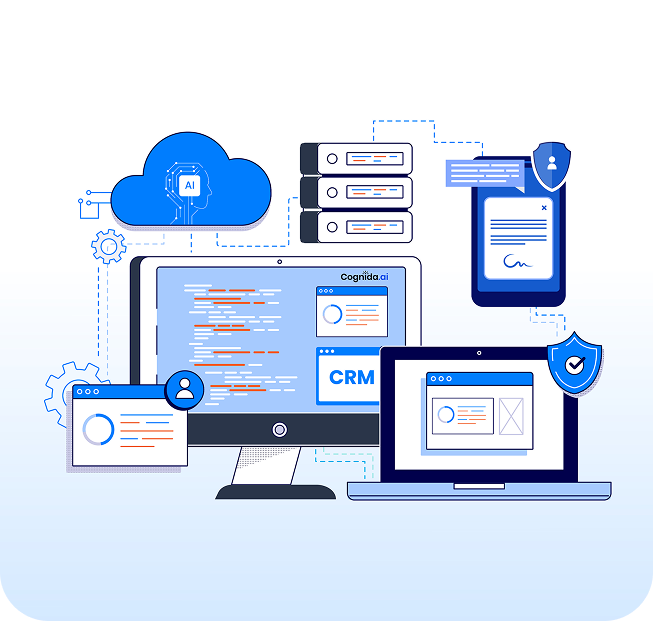
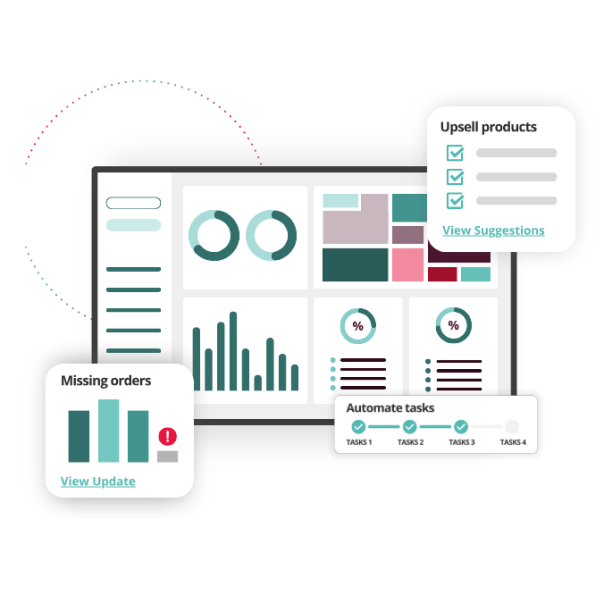
Implementing AI CRM successfully requires a strategic approach, not just technology.
AI CRM systems are being adopted across industries with impressive results.
AI CRM systems are being adopted across industries with impressive results.
AI CRM systems are redefining how businesses build, manage, and scale customer relationships. By combining CRM and AI, organizations gain predictive insights, intelligent automation, and AI agents CRM that work around the clock.
An AI powered CRM is no longer just a competitive advantage—it is a foundational requirement for sustainable growth.
If you want to transform your customer experience with intelligent automation, predictive insights, and scalable AI agents, connect with kivo.ai today.
An AI CRM system uses machine learning and automation to analyze customer data, predict behavior, and optimize CRM workflows.
AI agents CRM automate lead qualification, customer interactions, and task execution using real-time data and predictive logic.
AI powered CRM delivers predictive insights and autonomous actions, not just data storage and manual tracking.
Marketing automation artificial intelligence triggers personalized campaigns based on behavioral data and intent signals.
Yes, platforms like kivo.ai are built to scale securely across teams and high-volume customer data.
One of the biggest cost saving advantages of AI is automation. Tasks that once required hours of manual effort can now be completed in seconds. This includes:
With the help of AI business management software, organizations can reduce dependency on large HR teams and allocate resources more effectively.
Hiring the right talent is crucial but often expensive. AI simplifies recruitment by:
This reduces hiring time and eliminates unnecessary recruitment costs.
AI systems analyze large volumes of data to provide actionable insights. This helps HR teams make informed decisions about hiring, retention, and workforce planning.
Using AI in HRM, companies can predict employee turnover and take proactive measures, ultimately saving costs associated with frequent hiring.
AI powered onboarding systems provide personalized training experiences for employees. These systems adapt to individual learning speeds, reducing the need for extensive in-person training sessions.
This not only saves money but also ensures better employee performance.
Payroll errors can lead to serious issues, including employee dissatisfaction and compliance risks. AI systems ensure:
Automation removes the chances of manual miscalculations.
Maintaining employee records manually often leads to inconsistencies. AI systems centralize data and automatically update information, ensuring accuracy across all HR functions.
Keeping up with labor laws and regulations can be complex. AI tools monitor compliance requirements and ensure that all HR processes align with legal standards.
This reduces the risk of penalties and legal complications.
AI chatbots provide instant responses to employee queries related to policies, salaries, and leave management. This minimizes miscommunication and ensures employees always receive correct information.
.svg)